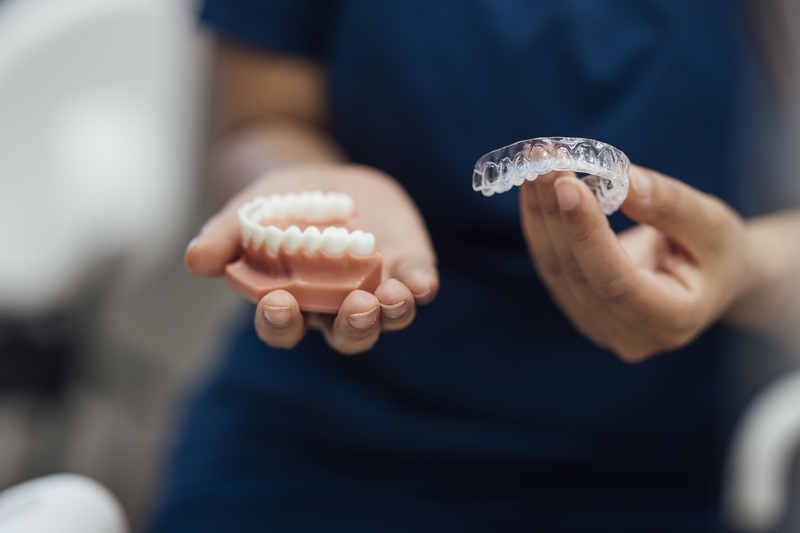
Invisalign has become a popular choice among professionals who want to straighten their teeth without making orthodontic treatment obvious. Its greatest advantage is the level of control it gives an experienced orthodontist over each stage of tooth movement.
Every set of Invisalign aligners is part of a digitally planned treatment sequence. Your orthodontist determines how each tooth should move while accounting for your bite, gum health, existing restorations, jaw function, and long-term dental needs.
The trays may appear simple, but creating predictable, healthy movement with them requires considerable precision.
The Treatment Begins Before the First Aligner
Invisalign treatment starts with a detailed evaluation. Digital scans create an accurate three-dimensional model of your mouth, while photographs, X-rays, and a clinical examination provide information that a scan alone cannot capture. Your orthodontist studies the position of your teeth, their roots, the supporting bone, and the way your upper teeth meet your lower teeth.
The Invisalign digital platform can then generate a proposed sequence of movement. This is where clinical judgment becomes especially important. Software can create a simulation, but your orthodontist determines if the proposed movements will work with your anatomy. They may change the timing, direction, or amount of movement planned for individual teeth before approving the case.
Adult Teeth Come With a History
Invisalign for adults often involves details that were not present during adolescence. Your teeth may have been shaped by previous orthodontic treatment, years of biting pressure, dental restorations, gum changes, or tooth loss. Each factor influences what can move and how movement should be approached.
A dental implant, for example, stays fixed in the bone. It cannot move with the surrounding natural teeth. Crowns and bridges may affect attachment placement, while reduced bone support may call for lighter forces and closer monitoring. If your dentist plans to place an implant, veneer, or crown, orthodontic treatment may first be used to create the proper amount of space.
These cases require coordination. Your orthodontist may work with your general dentist, periodontist, oral surgeon, or restorative specialist so each phase supports the next. The result should fit into your larger dental plan rather than create new obstacles for future care.
Digital Planning Allows for Smaller Decisions
Clear aligner therapy moves your teeth through a series of carefully timed stages. Each tray places pressure on selected teeth, encouraging them to shift gradually before you move to the next aligner.
Some movements require additional control. Small tooth-colored attachments can be bonded to the teeth to help the aligners grip more effectively. Elastics may be added when the upper and lower arches need to move in relation to one another. In certain cases, a small amount of enamel may be removed between teeth to create enough room for healthy alignment.
Digital planning allows Dr. Greenberg to study how one movement may affect the next. A crowded tooth may need space before it can rotate. Bite correction may need to begin before the front teeth reach their final positions. A vulnerable tooth may require a slower pace to protect its supporting tissues.
This sequencing is where Invisalign solutions become highly individualized. Two patients with similar-looking smiles may need entirely different plans once their bites, roots, and dental histories are considered.
Your Teeth Still Have a Say
A digital model predicts movement, but teeth do not always follow the initial projection perfectly. Root shape, bone density, gum health, aligner wear, and the difficulty of a particular movement can all affect progress.
Follow-up appointments allow Dr. Greenberg to confirm that each aligner is fitting properly and your teeth are tracking as planned. If one tooth begins to fall behind, she may adjust an attachment, change the wear schedule, take a new scan, or order refinement aligners.
Refinements are common in clear aligner therapy, especially in complex adult cases. They allow the treatment plan to respond to what is happening in your mouth instead of relying entirely on the original simulation.
Consistent wear also makes a substantial difference. Most patients need to wear their Invisalign aligners for approximately 20 to 22 hours per day. Long breaks allow your teeth to drift away from their planned positions and may cause later trays to fit poorly.
A Straighter Smile Should Also Function Well
Appearance may bring you to the consultation, but your bite plays a major role in treatment planning. The way your teeth meet determines how pressure travels through your mouth each time you bite, chew, or swallow.
Poorly distributed pressure can contribute to enamel wear, strained muscles, damaged restorations, and tenderness around the jaw. Orthodontic treatment is not a universal answer for temporomandibular joint disorders, though jaw function still deserves careful attention when your tooth movement is planned.
Dr. Greenberg evaluates the relationship among your teeth, bite, jaw, and airway. Her experience with complex orthodontic and TMJ cases brings a broader perspective to adult Invisalign treatment, particularly for patients who have been told that their case is too difficult for aligners or requires surgery or tooth extraction.
Invisalign Still Has to Fit Your Actual Life
Clear aligners are well suited to a professional schedule because they can be removed for meals, important events, brushing, and flossing. Most people can speak comfortably while wearing them after a short adjustment period.
You may notice pressure when you begin a new set of aligners. Your speech could sound slightly different for a few days, and tooth-colored attachments may be visible at close range. These changes tend to become less noticeable as you settle into the routine.
The removable design also places greater responsibility on you. Regular wear keeps each stage on schedule. It helps to develop a consistent rhythm for meals, cleaning your teeth, and reinserting the trays instead of treating wear time as something to catch up on later.
The Provider Shapes the Outcome
Invisalign gives orthodontists a sophisticated set of planning and treatment tools. The results still depend heavily on the person using them.
An experienced orthodontist knows which movements aligners can handle predictably, where additional mechanics may be needed, and when braces may offer better control. They also know when another dental specialist should be involved before treatment moves forward.
Once active treatment is complete, retainers help your teeth remain in their new positions while the surrounding tissues stabilize. Dr. Greenberg will recommend a retainer schedule based on your case and continue monitoring your alignment over time.
If you are considering Invisalign treatment in Pasadena, ask about the plan behind the trays. Schedule a consultation with Greenberg Orthodontics & TMJ to learn how Dr. Vickie Greenberg can use digital planning, advanced imaging, and over 25 years of experience to create an approach built around your dental health, function, and daily life.


