Braces and aligners create steady pressure against your teeth, but movement begins only after the bone around each root responds. One side of the socket has to make room while the other rebuilds support behind the tooth.
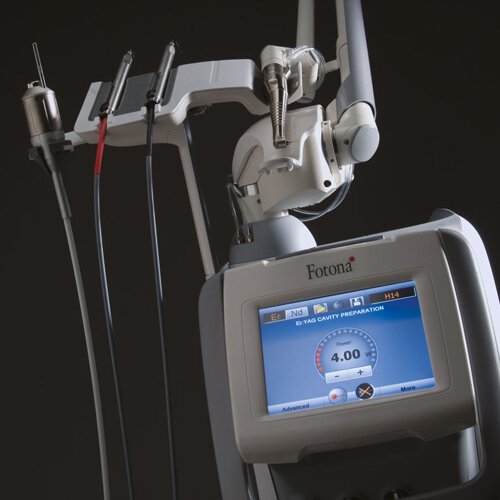
AcceleLase® Therapy is designed to encourage that response with low-level laser light. In a well-suited case, our patients may see treatment progress up to 50% faster. Individual results can fall anywhere below that figure, depending on your biology and the movements included in your treatment plan.
What Actually Moves a Tooth?
Each tooth sits in alveolar bone, cushioned by a thin periodontal ligament. That ligament senses pressure from an orthodontic appliance and sends signals to the cells responsible for remodeling the socket.
Osteoclasts clear small amounts of bone from the direction the tooth needs to travel. Osteoblasts rebuild bone behind the root as it moves. The tooth remains supported throughout the process, even as its position changes.
Much of this work is invisible. An aligner can look almost identical from one week to the next while the ligament and bone respond beneath the gumline. If those tissues need more time, additional force can increase risk without producing healthy movement.
What Light Energy Changes
AcceleLase uses photobiomodulation, also called low-level laser therapy or laser light therapy. This non-invasive treatment delivers low-power light energy to the tissues around the teeth. Cells absorb the light, which may increase production of adenosine triphosphate, or ATP. Cells use ATP as fuel for ordinary functions, including tissue repair and bone turnover.
Dr. Vickie Greenberg performs the treatment in the office and directs the laser energy toward areas involved in active tooth movement. There are no incisions, and you can return to your regular routine afterward. Many patients notice less soreness from orthodontic pressure.
The orthodontic appliance controls where the teeth move. AcceleLase supports the tissue activity that allows the movement to occur.
When we discuss the 50% rule with a patient, we are describing the strongest acceleration we may see. A finish date still depends on how that patient’s tissues respond. Research on photobiomodulation is encouraging, with results varying across studies. Laser parameters, treatment schedules, appliances, and the types of movement being measured all differ.
A person closing a small amount of space may respond differently from someone undergoing major bite correction. Age, bone density, root position, gum health, and previous dental work also influence the pace. Dr. Greenberg reviews your diagnostic imaging and treatment mechanics before estimating what AcceleLase could realistically change in your case.
Why Faster Treatment Still Takes Precision
Braces, clear aligners, elastics, and other appliances apply force in a planned direction. Consistent wear keeps that plan moving. Long gaps without aligners, skipped elastics, broken brackets, and missed appointments can lengthen treatment despite the added laser therapy.
Keep your appliances on schedule and maintain healthy gums around the teeth being moved. Monitoring visits give Dr. Greenberg a chance to check the fit of an aligner, the position of the roots, and the way your bite is developing. A small adjustment at the right time can prevent a larger delay later.
Adults often bring a longer dental history to orthodontic treatment. Crowns, missing teeth, gum recession, and bone loss can affect the amount of force a tooth should receive. AcceleLase may still fit your treatment plan, though the sequence may be more conservative in certain areas.
Comfort is also taken seriously. Photobiomodulation has been studied for its anti-inflammatory effects and potential pain relief, and some patients experience less discomfort after an adjustment or a new set of aligners. That can make it easier to stay consistent without changing the mechanics of treatment.
Your Timeline Comes From Your Body
Dr. Greenberg has more than 25 years of experience planning complex, non-surgical orthodontic care. She uses AcceleLase as part of a larger strategy built around root support, bite function, and the response she sees during treatment.
If treatment length has kept you from getting started, schedule a consultation with Greenberg Orthodontics & TMJ Airway today. Your exam and diagnostic records will show how your teeth are positioned, how much movement is needed, and how light-assisted treatment may affect your expected timeline.


