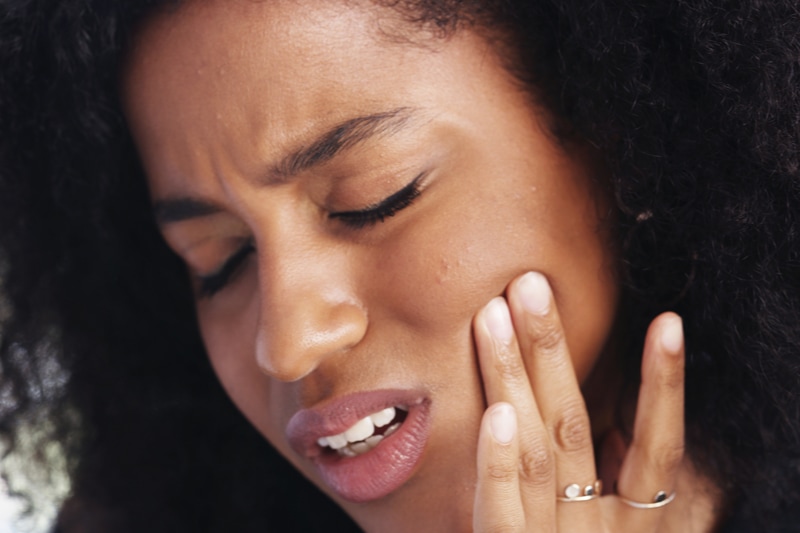
You spend an hour with a massage therapist or chiropractor, your neck feels fluid and relaxed. By the time you drive home, the tension has snapped back into place. For people suffering from persistent jaw pain and tension headaches, it’s an all-too-common frustration.
You may have seen a neurologist or tried a rotating door of prescriptions, but the vice-grip around your head won’t go away. The missing link for many patients is in the way the teeth meet, known as the cervical connection. This link between the jaw and the upper spine is often the overlooked ground zero for chronic headaches and facial pain.
What are TMJ Disorders?
The temporomandibular joint (TMJ) is one of the most complex structures in the human body. Acting as a sliding hinge, it connects your jaw to the skull. However, it does not function in isolation. Temporomandibular disorders (TMD) are frequently linked to the cervical spine because the muscles that control jaw movement share a neurological hard-wiring with the neck and shoulders.
TMJ-related headaches often feel like a band tightening around the skull, frequently turning into more severe headaches that mimic migraines. When you have TMJ issues, the muscles that control the jaw joint, specifically the masseters and temporalis, become overworked. Because these muscles are part of a continuous kinetic chain, muscle tension in the jaw radiates downward. At the same time, muscle spasms in the neck can pull the jaw out of alignment.
Symptoms to Look Out For
When the jaw and neck are in a constant state of tug-of-war, the symptoms are rarely limited to a simple headache. Temporomandibular joint dysfunction manifests in constant discomfort that interferes with daily life.
People who suffer from TMJ disorders often report a clicking or popping sound when they open or close their mouths. This is the sound of the articular disc within the joint slipping out of place. Over time, this mechanical friction causes facial pain and makes jaw movement difficult.
Beyond the joint itself, TMJ symptoms can include:
- Ear Fullness: A sensation that the ears are clogged, often despite a clean bill of health from an ENT. This happens because the jaw joint sits directly adjacent to the ear canal.
- The Heavy Head Sensation: The feeling that the neck can no longer support the skull.
- Popping Sounds: Audible noises during chewing or speaking.
- Shoulder Pain: Tension that travels from the jaw muscles down into the trapezius and shoulders.
- Muscle Spasm: Sudden, involuntary contractions in the muscles that control the jaw, often triggered by jaw clenching.
Why the Neck First Approach Often Fails
The reason that relief from physical therapy or massage feels so temporary is that the jaw is the anchor for the muscles of the head. If your teeth meet incorrectly, even by a fraction of a millimeter, your brain perceives this as structural instability.
To protect the skull, the jaw muscles stay on, effectively clenching or grinding 24/7. This jaw clenching forces the neck to work overtime to stabilize the head. If you don't address the TMJ issues, the neck will never stay relaxed. This is why many people fail to find relief through traditional physical therapy alone; the jaw keeps pulling the system back into a state of tension. This is a primary reason why tension headaches become chronic headaches.
Dental Equilibration for TMJ Pain
While many patients are prescribed a generic mouth guard to prevent clenching or grinding, these devices often only protect the teeth. They don’t address the actual cause of the TMJ pain.
True long-term relief requires a deep understanding of dental and craniofacial research. For many, the answer lies in dental equilibration: the clinical fine-tuning of how the teeth interact. When there are misaligned teeth, the jaw has to shift every time you close your mouth to find a stable resting position. This constant shifting creates muscle spasms and persistent jaw pain.
By balancing the bite, we allow the temporomandibular joint to rest in its natural, neutral position. This stops the trigger for tension headaches at the source.
The Role of Lifestyle and Stress Management
While biomechanics play a major role, we can’t ignore the impact of stress. Stress triggers the sympathetic nervous system, leading to habits like nail biting, gum chewing, or nighttime clenching or grinding.
TMJ relief must include stress management and relaxation techniques. By learning to reduce stress and tension in the body, patients can prevent the flare-ups that lead to chronic headaches. Simple lifestyle changes like maintaining good posture while working at a computer, reducing gum chewing, and avoiding nail biting can all significantly relieve symptoms.
Personalized Treatment Plans to Find Relief
Every patient’s headache patterns and TMJ symptoms are unique. Healthcare providers must offer personalized treatment plans that go beyond a one-size-fits-all approach.
Modern craniofacial research has introduced several other treatments to relieve pain without resorting to temporomandibular joint surgery, including:
- Oral Appliance Therapy: Custom-fabricated orthotics that retrain the jaw muscles and provide a stable base for the jaw joint.
- Transcutaneous Electrical Nerve Stimulation (TENS): Using low-voltage electrical currents to relieve pain and relax soft tissues and muscles.
- Laser Therapy: To reduce inflammation within the temporomandibular joint and promote healing of the soft tissues.
- Pharmacological Support: Short-term use of nonsteroidal anti-inflammatory drugs (NSAIDs) to manage acute muscle spasm and pain.
It is important to note that while some cases are severe, conservative, non-invasive treatments should always be the first line of defense. Most patients do not need implant surgery or temporomandibular joint surgery to achieve a pain-free life.
The Affect On the Nervous System
We often see patients who have dealt with jaw pain and tension headaches for years show signs of wear and tear on their nervous system. The constant aching pain leads to a state of chronic exhaustion and diminished overall well-being.
Once the temporomandibular joint is stabilized, the change is often profound. We have seen patients report that after their first few weeks of oral appliance therapy, their migraine headaches vanished and their energy levels returned. This is the power of providing the right fix for the problem, not just treating symptoms. When a healthcare provider takes the time to investigate the exact cause of the jaw injury or misalignment, the path to long-term relief becomes clear.
Why Expertise Matters
The American Dental Association recognizes the complexity of temporomandibular disorders. Because the jaw and neck are so closely linked, you need a provider who looks at the big picture.
If you are tired of masking the pain with medication and are ready to address the exact cause of your persistent pain, it is time to look at the cervical connection. By harmonizing the way your teeth meet and supporting the muscles of the jaw, you can finally find relief and reclaim your daily life. Your journey toward overall well-being starts with a balanced bite.


