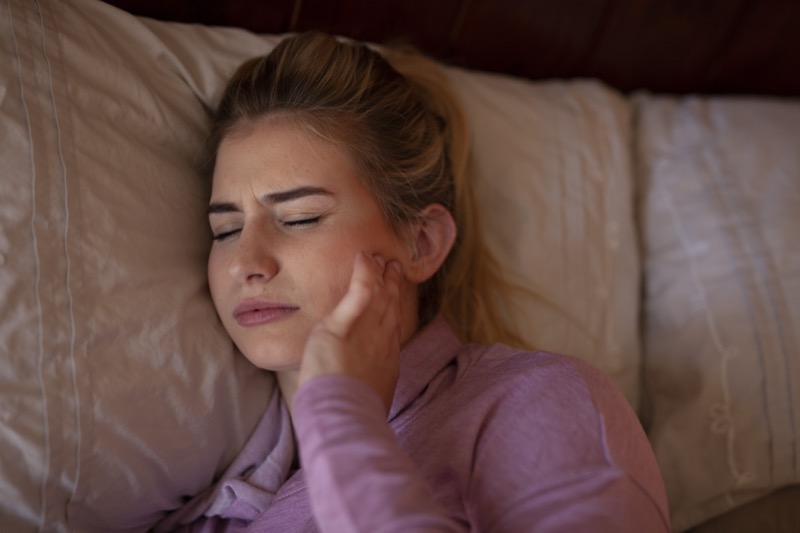
Teeth grinding during sleep is often blamed on stress, but nighttime bruxism can have several contributing factors. In some people, grinding or clenching happens around a breathing event, when the body is working to reopen or stabilize a restricted airway.
That does not mean teeth grinding proves you have sleep apnea. It does mean your jaw, teeth, sleep quality, and breathing deserve to be considered together. A nightguard may protect your teeth, but an evaluation should also look at what may be triggering the grinding.
What Is Sleep Bruxism?
Bruxism is the repeated clenching, grinding, or thrusting of your jaw. Awake bruxism can occur during stress, concentration, or anxious moments. Sleep bruxism happens outside your conscious control, so you may not know it is occurring until a sleep partner hears the grinding or your dentist notices changes in your teeth.
Frequent bruxism can contribute to flattened biting surfaces, enamel fractures, tooth sensitivity, worn restorations, jaw tightness, headaches, facial pain, or soreness near the ears. The effects may develop gradually. Your teeth may show signs of overnight grinding long before you feel pain.
Can an Airway Blockage Cause Bruxism?
Sleep bruxism can occur near an episode of restricted breathing. When airflow narrows during sleep, your brain may briefly activate the jaw muscles and move the lower jaw forward. That movement can help create more space behind the tongue and bring your body closer to an awake state.
Researchers are still studying the relationship between sleep bruxism and sleep-disordered breathing. Grinding alone does not diagnose obstructive sleep apnea, and many people grind for reasons unrelated to an airway problem. The connection is important enough to investigate, especially when grinding occurs alongside snoring, gasping, dry mouth, restless sleep, morning headaches, or daytime fatigue.
If your teeth are wearing down and your sleep partner notices loud grinding, an evaluation should account for both dental damage and nighttime breathing. Greenberg Orthodontics & TMJ Airway evaluates bruxism alongside jaw function and airway concerns.
Why Stress Is Only One Possible Factor
Stress and anxiety can contribute to awake bruxism, but they do not explain every case of nighttime teeth grinding. Other factors may include family history, caffeine, alcohol, tobacco use, certain medications, sleep disorders, and changes in jaw or airway function.
You may also have more than one type of bruxism. For example, you might clench during the day while working and grind at night during a breathing event. Your treatment plan should reflect when the grinding occurs, what symptoms accompany it, and how your teeth, jaw joints, and airway are functioning.
Do not stop or change a prescribed medication on your own. If you think a medication may be affecting your sleep or jaw muscles, discuss it with the prescribing clinician.
Signs That Your Grinding Needs To Be Checked Out
Your dentist may identify tooth wear before you recognize a problem. Signs can include:
- Flattened or chipped teeth
- Cracks in the enamel or damage to dental restorations
- Tooth sensitivity
- Jaw pain, tightness, or fatigue in the morning
- Headaches, earaches, or facial pain
- Receding gums or changes in the way your teeth meet
Sleep-related symptoms can provide additional clues. Snoring, waking with a dry mouth, gasping during sleep, restless nights, and daytime fatigue may point toward sleep-disordered breathing. These symptoms have several possible causes, so they require an appropriate evaluation rather than a self-diagnosis.
Can a Nightguard Help?
A custom oral appliance can separate your teeth and reduce direct wear on enamel, restorations, and other dental work. It may also help with habit reversal in some cases. A nightguard protects the teeth, but it may not explain why the grinding is happening.
The appliance also needs to suit your bite, jaw joints, and airway. If sleep-disordered breathing is involved, the design and position of an appliance deserve careful attention. A device that is poorly suited to your needs may fail to protect your teeth or may affect how your jaw and airway function during sleep.
Depending on your symptoms, your evaluation may include a review of your dental history, an examination of tooth wear and jaw movement, airway assessment, or referral for a sleep study. A sleep study can measure breathing, oxygen levels, brain activity, muscle activity, and arousals during sleep. It can help show if grinding episodes occur near respiratory events.
Treating the Cause and Protecting Your Teeth
Treatment depends on what your evaluation reveals. Awake bruxism may respond to behavioral awareness, relaxation techniques, physical therapy, and changes to habits that increase jaw tension. Sleep bruxism may require an appliance to limit dental damage while your breathing is evaluated.
If you have obstructive sleep apnea or another sleep-related breathing disorder, treatment may involve positive airway pressure, an oral appliance, orthodontic care, or another option selected for your anatomy and the severity of the condition. Care may also involve coordination with a dentist, orthodontist, sleep physician, or another healthcare professional.
At Greenberg Orthodontics & TMJ Airway, Dr. Vickie Greenberg considers the relationship between your teeth, jaw, temporomandibular joints, and airway. Her practice provides airway and snoring treatments and TMJ care for patients whose symptoms involve more than tooth wear alone.
If you wake with jaw pain or headaches, notice changes in your teeth, or have been told that you grind during sleep, schedule a consultation. An evaluation can help determine what your nighttime grinding may be signaling and which next steps are appropriate for your care.


